
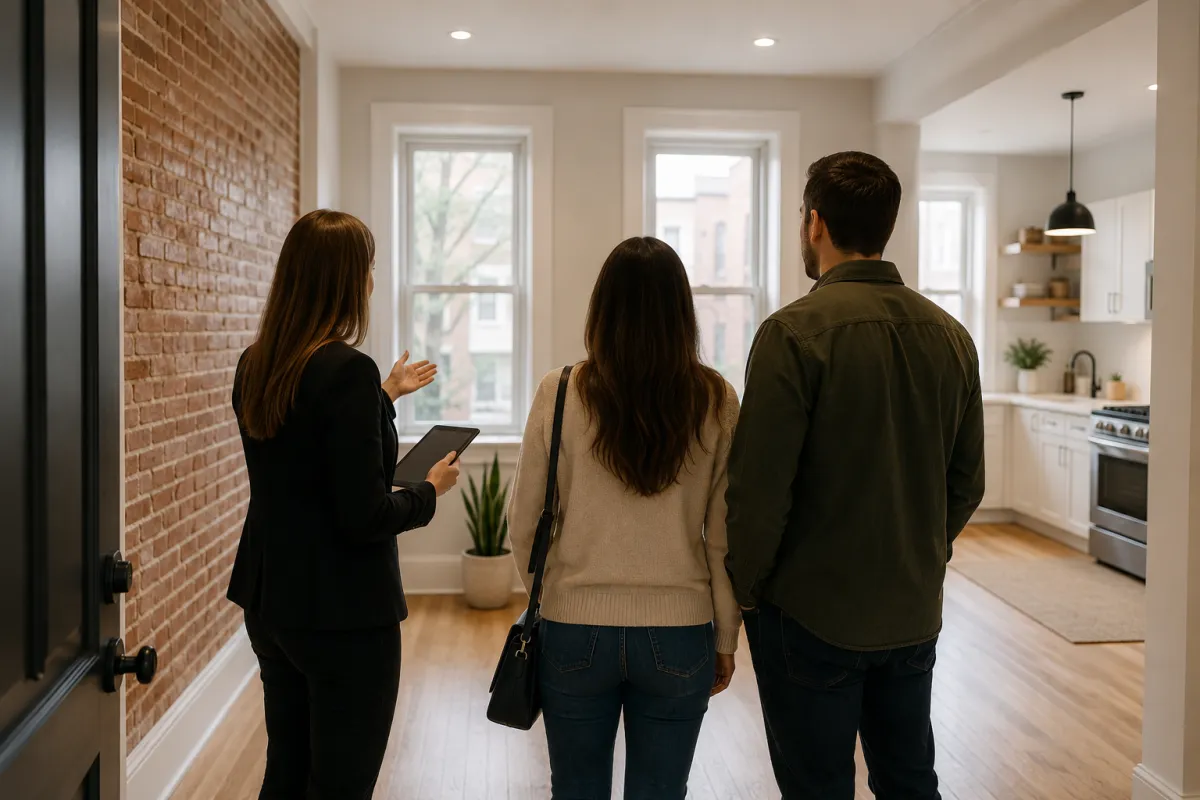
Touring Your First Philly Home: What Actually Happens
What Actually Happens When You Tour a Home in Philadelphia for the First Time?
A first showing in Philadelphia usually runs 15 to 30 minutes, led by your buyer's agent, who's trained to spot things you won't, foundation cracks, party wall issues in row homes, water stains, an electrical panel older than you are. You're not deciding anything on the spot. You're gathering information to compare against the next few houses on your list. Most Philly buyers tour 8 to 12 homes before they ever sign an Agreement of Sale, so one showing almost never makes or breaks anything.
You pull up outside, and your brain starts running through everything at once. What if I say something dumb? What if I love it and can't afford it? What if I hate it and my agent thinks I'm being picky?
Take a breath. None of that matters yet. A showing isn't a test, it's information gathering, and every agent in the room knows you're new at this. That's the whole point of bringing one.
You don't need a plan walking in. You just need to know what's actually going to happen once you're through the door.
Before You Even Walk In
Your buyer's agent schedules the showing, usually a 15- to 30-minute window, sometimes stacked back-to-back with two or three other homes the same afternoon. The listing agent might be there, might not. Occasionally the seller is home, which is its own particular flavor of awkward for everyone involved.
A few things worth knowing ahead of time:
You don't need a pre-approval letter for a first tour. Some agents ask for one before setting up showings, especially for higher-end listings, but it's not universal. If you haven't talked to a lender yet, say so, it's a five-minute conversation, not a barrier.
Bring your phone, not a checklist you'll forget in the car. Photos and quick voice notes ("kitchen, small, but the light's great, ask about the roof") do more work than a printed sheet.
Expect to hear the neighbors. Philly's housing stock is mostly row homes, shared party walls, shared drainage on a lot of older blocks. A little sound transfer is normal, not a red flag by itself.
What Actually Happens During the Showing
Your agent usually opens with a quick overview, what's been updated, what hasn't, anything unusual about the listing before walking you room by room. Good agents narrate as they go: the age of the water heater, whether the panel looks original, if a wall's been opened up without a permit somewhere along the way.
This part is less sales pitch and more audit. Your agent isn't there to talk you into loving the house. They're there to help you see past the staging and into what you'd actually be buying the bones, not the throw pillows.
You're doing two things at once: picturing your life there, and noting anything that would stop you cold. Write down both. You'll want the full picture when you compare this house to the next three on your list.
What to Actually Look For (Especially in a Philly Row Home)
Row homes come with their own inspection instincts, and a first tour is a good time to start building them. A few things worth a second look, even before the official inspection:
Ceiling and wall stains. A brownish ring near the top of a wall usually means a past or current leak. Not always a dealbreaker but worth a question.
The electrical panel. Plenty of Philly's older housing stock still has knob-and-tube wiring or Federal Pacific panels behind the walls. Neither one automatically kills the deal, but both affect your insurance quote and how your inspector approaches the visit.
Basement moisture. Efflorescence, that white, chalky residue on foundation walls, shows up constantly in old Philly basements and is usually manageable. Still worth flagging so your inspector knows to look closer.
Party wall condition. Cracking near the shared wall between row homes can mean ordinary settling, or something that needs a structural opinion. Your inspector sorts out which later, for now, just note it.
Original versus replaced windows. Matters for energy costs, and if the property's sitting inside a 10-year tax abatement window, it's worth asking your agent exactly where it stands on the phase-down schedule, that math changed in 2022 and still trips people up.
None of this is your job to diagnose. That's what the inspection is for. The first tour is about noticing enough to know whether a house earns a second look not producing a punch list on the spot.
What Happens After You Leave
You'll usually debrief with your agent in the car or over a quick call, what worked, what didn't, whether it's worth going back. This is when the real questions get answered: how firm is the seller on price, how long has it been sitting, is there another offer already circling.
Most buyers don't fall for the first house they walk through, and that's not a problem to fix. It usually takes seeing somewhere between 8 and 12 homes before something clicks enough to write an Agreement of Sale. A second visit often with a contractor, a parent, or the partner who couldn't make the first one is common at that point, not a sign you're indecisive.
That's really the whole system: tour, take notes, compare, repeat until one house stops getting compared to the others. That's the one.
If you're getting ready to start touring homes and want someone walking through it with you, reach out anytime, we're happy to talk through what to expect before your first showing, no pressure to commit to anything yet.
Frequently Asked Questions
How long does a home tour actually take in Philadelphia?
Most first showings run 15 to 30 minutes. Larger or higher-end homes sometimes run closer to 45. Your agent will usually tell you the window in advance so you're not rushing or lingering awkwardly.
Do I need a pre-approval letter before touring homes?
Not always. Some agents and listings request one upfront, but plenty of first showings happen before financing is locked in. If you don't have one yet, tell your agent, it's a quick conversation to get pointed toward a lender.
What's different about touring a row home versus a suburban house?
Row homes share party walls and, often, drainage with the homes next door. That means some sound transfer, shared maintenance considerations, and inspection points, like party wall cracking that don't come up in detached suburban homes.
How many homes do people usually see before making an offer?
Most Philly buyers tour somewhere between 8 and 12 homes before writing an Agreement of Sale. Seeing a lot of houses isn't a sign you're behind schedule, it's how you figure out what actually matters to you.
Is it normal to see a house more than once before deciding?
Yes. A second visit often with a contractor, parent, or partner who couldn't make the first one is common, especially for a home you're seriously considering.