
Sewer Scope Before Buying a Philly Row Home: Worth It?
Should you get a sewer scope before buying a Philly row home?
For most older Philly row homes, yes, and it's one of the cheapest calls you'll make in the whole purchase. Here's why it matters more here than in most places: in Philadelphia, the homeowner owns the sewer line from the house all the way to the City's sewer in the street, including the stretch under the sidewalk. A standard home inspection doesn't look inside that pipe, so a sewer scope during your inspection window is the only way to see it before it's yours.
Why the pipe under the sidewalk is your problem
Most buyers assume the city handles anything under the street. It doesn't. The Philadelphia Water Department's customer responsibility rules put the house drain, the curb trap, the lateral running to the public sewer, and the connection to that sewer on the property owner. The City owns the main in the street and nothing on your side of it. The same goes for the water service line: you own the pipe from the City's main into your house, under the sidewalk and roadway included. On a row home built 80 or 100 years ago, that's a lot of old pipe you're about to inherit without ever having seen it.
When that pipe fails, the City's tool is a Notice of Defect, and it comes with a deadline. In March 2026, 6abc reported on a Manayunk block where PWD found a leaking sewer line under a sinking street. The homeowner got 10 days to address it or face a water shutoff, and the repair was estimated at about $12,000. That's the scenario a sewer scope exists to catch. Your regular homeowners insurance usually won't help either, since it covers sudden events, not a pipe that wore out over decades.
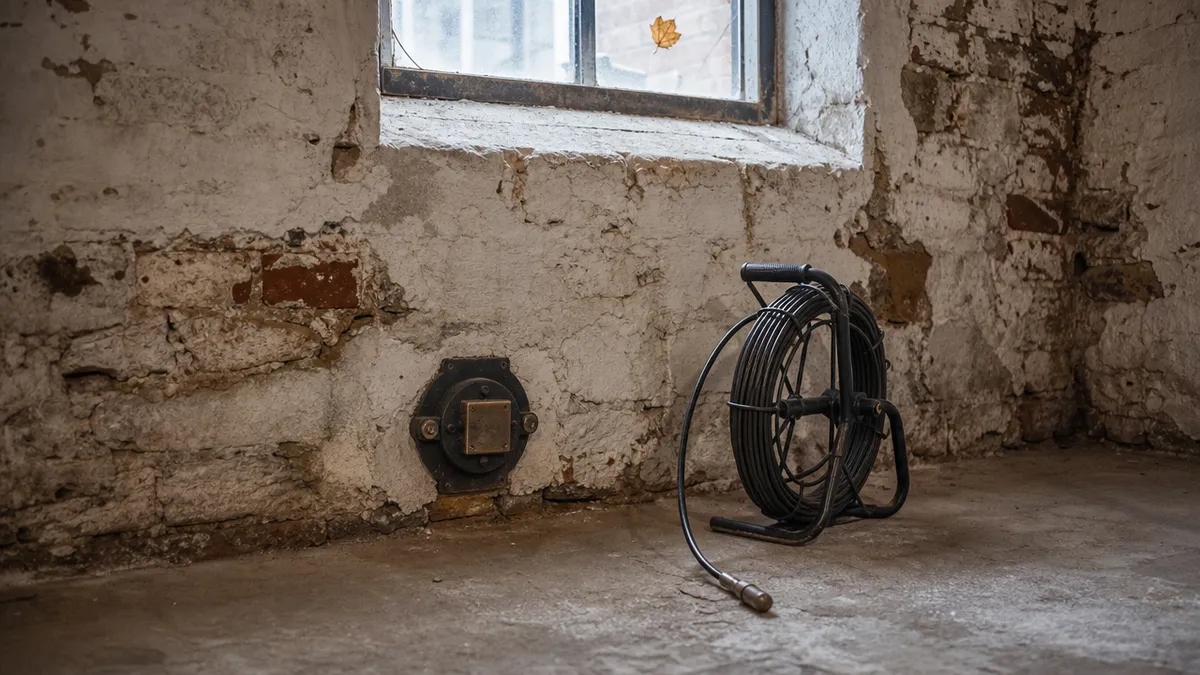
A sewer scope is simple. An inspector runs a camera through the cleanout in your basement and down the line toward the street, recording what it sees: roots, cracks, sags where water sits, offset joints, collapsed sections. You get video and a short write-up. As an add-on to a home inspection it usually runs a few hundred dollars; HomeAdvisor's national range for a standalone camera inspection is $271 to $1,725, so get a quote from your inspector before you assume the high end.
What we'd think about before you skip it
Timing is the first thing. On the standard Pennsylvania Agreement of Sale, your inspection contingency runs 10 days by default, and the scope has to happen inside that window to give you any leverage. Book it with your home inspection, not after. If you want the full picture of how that clock and the negotiation work, we walk through it in what to do when a Philly inspection comes back scary.
Second, what the house tells you. Old cast iron or clay pipe, big street trees out front, a basement floor drain that's backed up before, a sewer smell, or a block where the street's been dug up recently are all reasons to treat the scope as non-negotiable. A seller who knows about a sewer problem has to disclose it, and that's covered in what Philly sellers must disclose. But plenty of owners have never had the line looked at and honestly don't know.
Third, what you'd do with a bad result. This is where the scope pays for itself. A video showing roots or a cracked section gives you a concrete repair quote to put in front of the seller: a credit, a price reduction, or a repair before closing. What we tell buyers is to ask for a credit over a seller-managed repair when the work is under the sidewalk, because you want to choose the plumber and see the permit. A credit also lowers what you bring to the table, which matters when you're already budgeting for Philly buyer closing costs.
And if something does go wrong after you own it, know your backstops. PWD's HELP loan covers repairs to water service and sewer lines at 0% interest over 60 months, paid through your water bill, but it generally requires a Notice of Defect first and puts a lien on the property until it's repaid. There's also an optional private service line protection plan offered through the Philadelphia Energy Authority partnership with American Water Resources; the Inquirer put it at about $15 a month in 2024, so check the current price.
Where skipping it can make sense: newer construction where the lateral was replaced with the build, a house where the seller can hand you a recent scope video and a receipt for a line replacement, or a condo where the building handles the sewer connection. Outside of those, it's a few hundred dollars against a five-figure surprise.
Frequently Asked Questions
Who is responsible for the sewer line under the sidewalk in Philadelphia?
The property owner. Under Philadelphia Water Department rules, the owner is responsible for the house drain, curb trap, the lateral to the public sewer, and the connection to that sewer, including pipes under the sidewalk. The City is responsible for the sewer main in the street.
Does a standard home inspection include the sewer line?
No. A standard inspection checks the plumbing you can see inside the house. Seeing inside the sewer lateral takes a separate camera inspection, usually booked as an add-on with your home inspector during the inspection contingency.
What happens if PWD finds a problem with my sewer line?
PWD can issue a Notice of Defect with a deadline to repair, and your water supply may be shut off if the repair isn't made. You hire a licensed plumber yourself, or apply for PWD's HELP loan, which is 0% interest over 60 months on your water bill with a lien on the property.
Can I negotiate if the sewer scope finds damage?
Yes, if the scope happens inside your inspection contingency period. A repair quote based on the scope video gives you grounds to ask for a credit, a price reduction, or a repair before closing under the Pennsylvania Agreement of Sale.
If you're buying an older Philly row home and want help deciding which inspections are worth it on that specific house, here's how we work with buyers.