
Neighborhood Spotlight: Queen Village
What's It Actually Like Living in Queen Village?
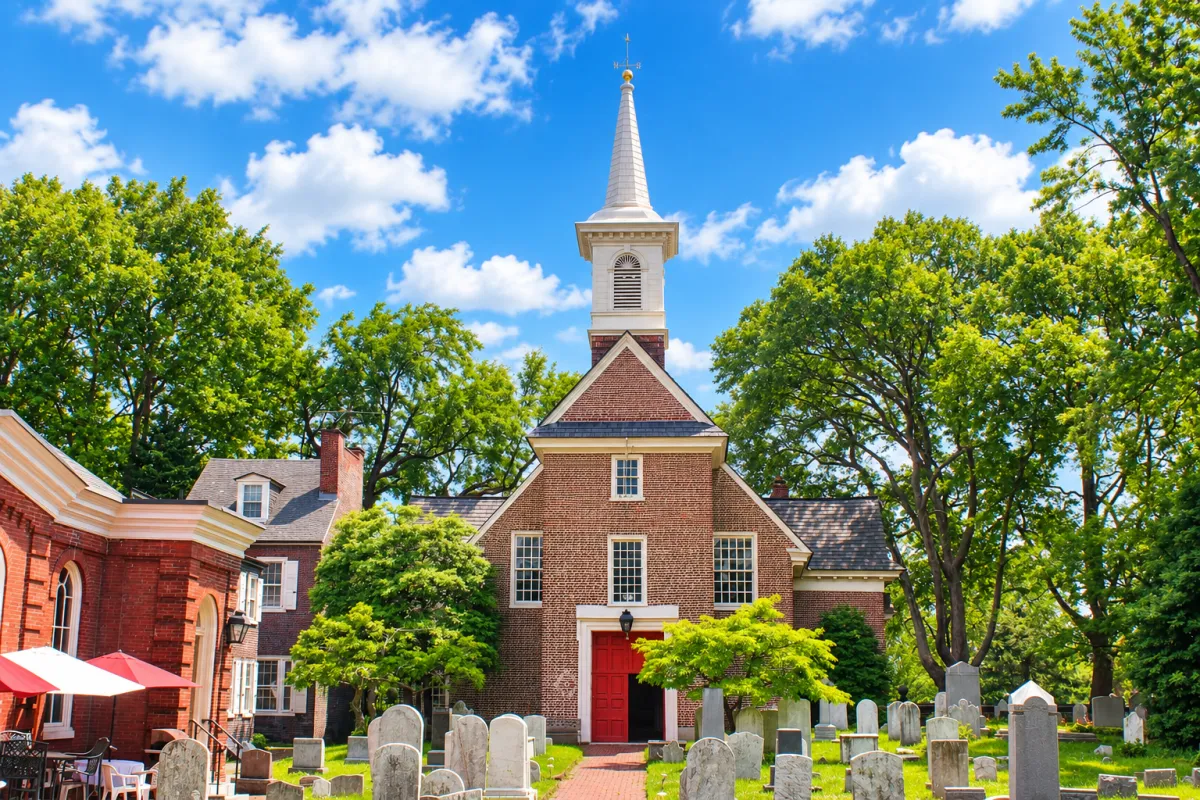
Most of Philadelphia's historic neighborhoods trade on the same handful of postcard images. Queen Village has one that actually earns it: Gloria Dei, better known as Old Swedes' Church, has been standing on Water Street since 1700 and is the oldest church in Pennsylvania still holding services. You can walk past it on an ordinary Tuesday on your way to get coffee. That's the neighborhood in one sentence, genuinely old, and completely unbothered about it.
The blocks themselves are narrow by design. Queen Village still has a real stock of trinity houses, the three-story, one-room-per-floor rowhomes built for dockworkers and tradesmen in the 1700s and 1800s, sitting next to full-width Federal rowhomes and the occasional newer infill build. Fabric Row on 4th Street, once the city's garment district, has turned into a run of small specialty shops. Head House Square still runs its farmers market on the original 1745 market shed. None of this is staged for visitors; it's just what's there.
What your money actually buys splits along the same lines as the housing stock. The trinity houses and smaller rowhomes on the interior blocks run roughly $400K to $700K, small footprints, original quirks, often a single bathroom. Standard-width rowhomes, especially ones closer to the Society Hill border or with updated interiors, run $700K to $1.2M. Larger Federal-style homes on the neighborhood's northern edge can push past that. These are directional, not pulled from live MLS data, worth confirming against current comps before quoting anyone a number.
Who this fits, and who it doesn't. Queen Village works for buyers who want genuine historic character without paying Society Hill's premium, who don't mind a narrow staircase in exchange for walking distance to South Street, Old City, and the Delaware waterfront. It doesn't work if you need a modern floor plan, a garage, or more than a postage-stamp yard, the housing stock here predates all three by about two centuries.
What's changing is mostly the empty lots. A handful of infill projects have gone up on former parking spots and vacant rowhome shells over the past few years, and there's ongoing talk about further revitalizing the South Street retail corridor, which has cycled through a few identities over the decades without fully settling on one.
If Queen Village doesn't quite fit, the neighborhoods on either side solve for different things. Bella Vista, just west, trades some of the colonial-era density for proximity to the Italian Market and a slightly more residential feel. Society Hill, immediately north, gets you a step up in polish and price with more Federal-era grandeur and less trinity-house grit. Passyunk Square, further south, is the value play, rowhomes and new construction at a real discount, with its own walkable commercial strip along East Passyunk Avenue.
If you're weighing Queen Village against the other nineteen, KG's Neighborhood Guide lays out the median price, walk and transit scores, and the actual trade-offs for all twenty side by side, the parts that don't show up at a Sunday open house.