
Philly Tax Abatement: How Many Years Are Actually Left?
How many years are left on this Philly home's tax abatement?
Assume less than the listing implies, then go check. On new residential construction the ten-year abatement starts the first month after the title date, not the permit date most listings quote, and if the abatement application was filed on or after January 1, 2022, the exemption drops ten percentage points every year instead of holding at 100%. So a home marketed as having "six years of abatement left" can be sitting at 50% coverage right now and at zero in five. The number that decides whether you buy the place is not how many years remain. It's what the tax bill looks like in the year the abatement stops carrying you.
Two homes on the same block, same price, same finishes, can carry property tax bills six thousand dollars apart for reasons neither listing mentions. The abatement is not a feature of the house. It's a schedule attached to it, and the schedule is already running.
What the two abatement rules actually do to your bill
There are two versions of the residential abatement in circulation right now, and which one you get depends on when the application was filed. Anything filed by December 31, 2021 sits under the old rule: 100% of the improvement value is exempt for the full ten years, then it stops all at once. Anything filed on or after January 1, 2022 is on the phase-down: 100% exempt in year one, 90% in year two, 80% in year three, on down to zero in year ten. Same headline, completely different math, and the listing almost never tells you which one you're looking at.
Here's what that means in dollars. Philadelphia taxes at 1.3998% of full market value under AVI. Take a $650,000 new construction condo where the Office of Property Assessment splits the value roughly $90,000 land and $560,000 improvement. While the improvement is fully exempt you're paying tax on the land only, so the bill lands near $1,300 a year. With no abatement at all, the same property is closer to $9,100. That's the swing you're underwriting, and on a phase-down property you're walking toward it in ten annual steps rather than falling off a cliff at the end. Run the actual OPA numbers for the specific address before you treat any of this as your figure, because the land and improvement split moves a lot from block to block.
The wrinkle almost nobody flags: a property with an active ten-year residential abatement is not eligible for the Homestead Exemption. You get one or the other, not both. The City puts the Homestead savings at about $1,399 a year for most homeowners, and you can only apply for it once the abatement has expired. If you're comparing an abated new build against a hundred-year-old row home two streets over, that's a real line item on the older house's side of the ledger that the abated listing gets to leave out.
The last piece is escrow. Your lender sets your monthly escrow off the tax bill that exists when you close, which on a fresh abatement is the small one. Every step down in the exemption is an escrow shortage the following year, and shortages get collected as a payment bump plus a catch-up. Nobody is doing anything wrong. It just means the payment your lender quotes you at the table is not the payment you'll have in year six, and it's worth asking what the numbers look like when you're getting pre-approved in Philly rather than after.
What we'd ask before you write the offer
Four questions, all answerable in an afternoon. What is the abatement's actual start date, meaning the title date on the first sale, not the permit or the certificate of occupancy? Which rule is it under, flat or phase-down? What percentage of the improvement is exempt for the current tax year? And what is the full un-abated bill at today's assessment, so you know the ceiling? That last one is the number to make your decision on. If the un-abated payment is comfortable, the abatement is a bonus. If it isn't, the abatement is a countdown, and you should know that before you're in it rather than in year seven.
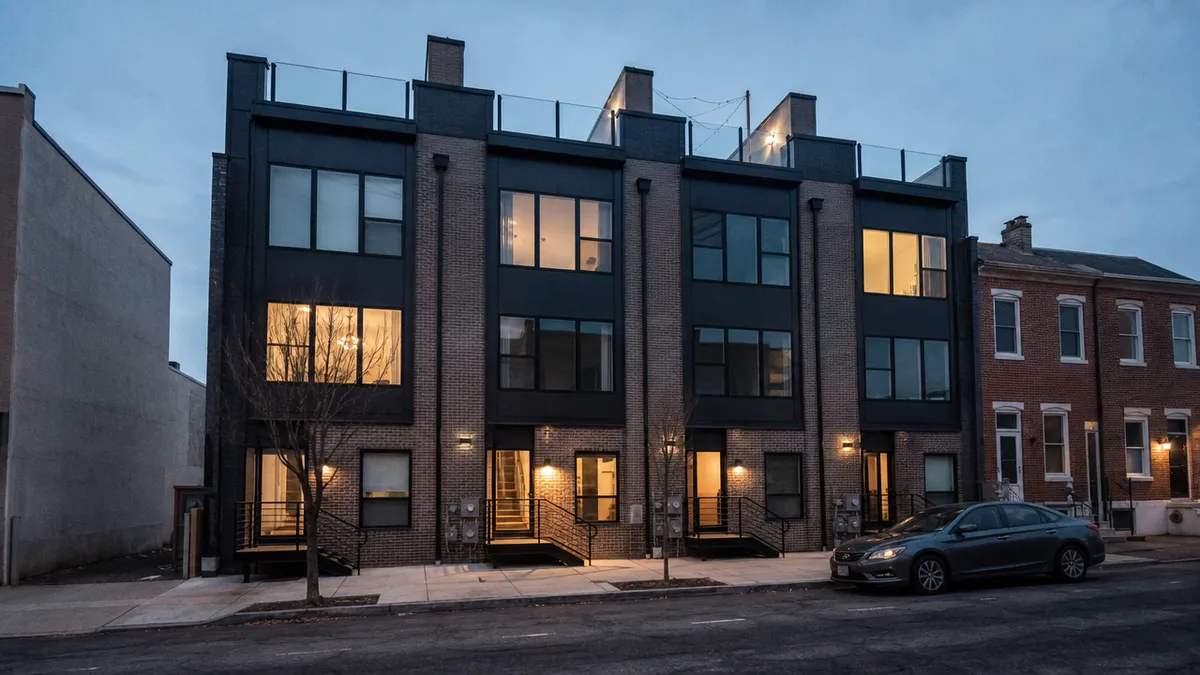
It's also worth separating the tax question from the house question, because they get tangled. We toured a new-construction project recently where the units looked great on paper, but no closet space, and the rear units get almost no natural light. Price tag: $700K+. New doesn't automatically mean better. An abatement makes a mediocre floor plan cheaper to hold for a few years. It doesn't make it a better home, and it doesn't help you at resale when the next buyer is looking at a shorter schedule than you got.
Where this breaks down is the buyer who is stretching to the top of their range and counting on the abated payment to make it work. That's the wrong reason to buy an abated home, and it's the most common one. The same goes for anyone planning to hold five years or less: you'll capture the cheapest part of the schedule and then hand the expensive part to a buyer who can do arithmetic. If you're near the edge of what's comfortable, the honest move is to figure out how much house you can actually afford in Philly against the un-abated number and shop from there. And if you already own an abated property and the assessment behind it looks wrong, that's a separate fight worth having, because appealing your 2027 Philly assessment lowers the number the abatement is eventually going to stop protecting.
Frequently Asked Questions
Does the tax abatement transfer to me when I buy the house?
Yes. The abatement stays with the property, not the owner, so you pick up whatever is left of the schedule. If four years remain, you get four years. What does not transfer is a fresh ten-year clock, which is the assumption that gets buyers into trouble on resale properties.
Does the abatement clock start at the permit date or the title date?
For new construction of residential properties under Ordinance 1456-A, the City says the abatement starts the first month after the title date. The permit date matters for a different reason: it sets the application deadline, which is sixty days from permit issuance, and it determines whether the property falls under the pre-2022 flat rule or the post-2022 phase-down. Plenty of published guides say the clock starts at the permit. For this abatement, it doesn't.
Can I get the Homestead Exemption on a home with an active abatement?
No. Properties carrying a ten-year residential tax abatement are not eligible for the Homestead Exemption. Once the abatement expires you can apply, and the City puts the typical savings at about $1,399 a year. Applications are due December 1 for the following year's bill.
How do I find out how much abatement is left on a specific address?
Look the address up through the Office of Property Assessment, where the property record shows the current assessment, the land and improvement split, and any active abatement. If the record is ambiguous, the OPA can confirm the start date and the exemption percentage for the current tax year by phone. Ask for both, not just the years remaining.
If you're looking at an abated home and want to know what the payment actually looks like in year seven, that's a short conversation with the real OPA numbers in front of us instead of a guess. You can grab a time on our calendar and we'll pull the record together.