
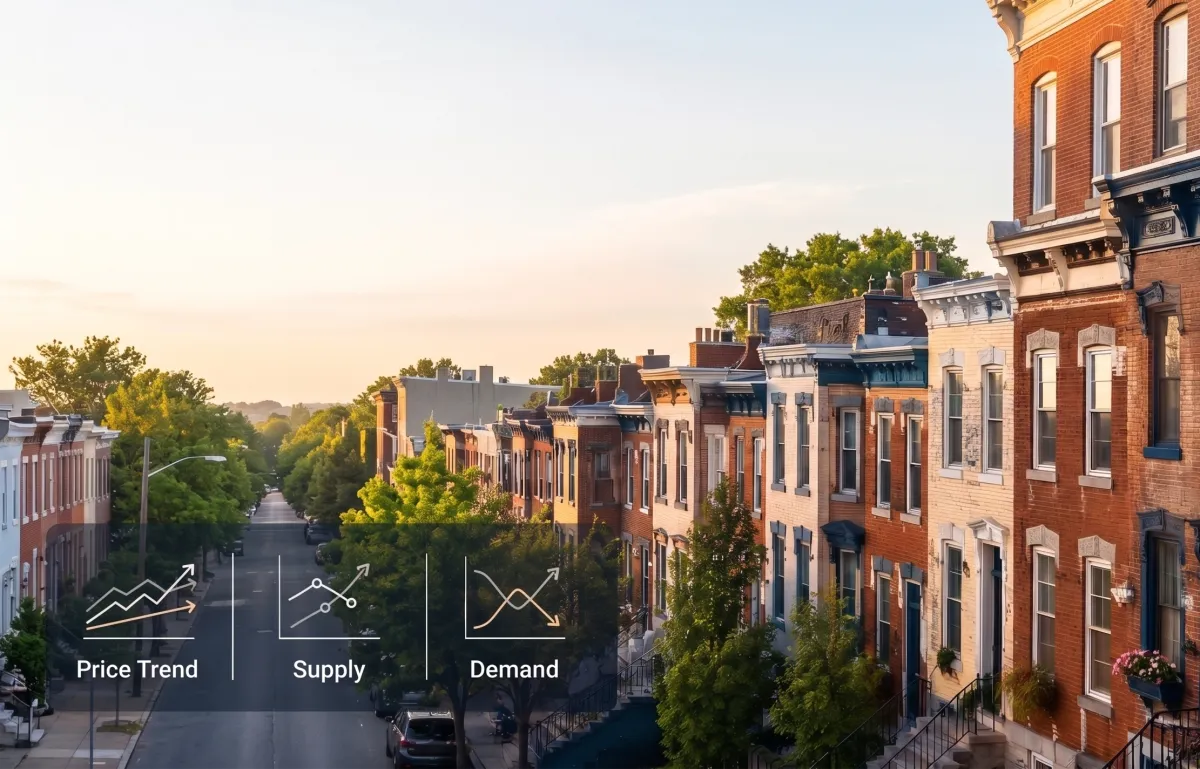
Is Now a Bad Time to Buy in Philly? Here's What the Data Actually Says
Is Now a Bad Time to Buy a Home in Philadelphia?
Philadelphia's market in August 2026 is best described as balanced, not bad. Median prices are up modestly year over year, homes are taking longer to sell than they did at the 2021-2022 peak, and inventory has grown compared to last year. Mortgage rates are sitting in the high-6% range with no major drop expected before year-end. None of that makes buying a mistake right now, it means buyers have more room to negotiate than they've had in years, even if borrowing costs are still uncomfortable.
Rates are still bad. Prices haven't crashed like everyone said they would. Maybe I should just wait another year and see what happens.
Fair thought. Almost everyone talking to us right now is having some version of it. Here's what the actual numbers say, instead of the headlines.
You don't need rates to hit some magic number to buy. You just need the math to work for your specific situation, right now and that's a different question than what the market's doing in general.
What the Data Actually Says Right Now
A few numbers worth knowing before you decide anything:
Prices. Philadelphia's median sale price is running in the $270,000s to $280,000s citywide, up somewhere in the 3-5% range year over year depending on the source and the month. That's modest appreciation, not a runaway market and not a decline.
Days on market. Homes are sitting for longer than they did during the pandemic-era frenzy, citywide averages are landing anywhere from the high-40s to high-60s in days on market, depending on neighborhood, price point, and how the listing was priced and presented.
Inventory. Active listings are up somewhere around 5-10% compared to last year, more choices than buyers have had in a few years, though still below pre-2020 norms in a lot of neighborhoods.
Rates. The 30-year fixed has been hovering in the high-6% range through the summer. Forecasters like the Mortgage Bankers Association and Fannie Mae are projecting rates to hold around 6.4-6.5% through the rest of the year, not a dramatic drop, but not climbing much further either.
None of these numbers say "crash." None of them say "frenzy." They say balanced, which is a less exciting headline, but a more useful one.
What "Balanced" Actually Means for You
A balanced market means neither side has all the leverage. Homes are getting roughly 2 offers on average right now, down sharply from the 5 to 8 offers that were common at the 2021 peak. That's a real shift, it means less pressure to waive every contingency just to compete, and more room to actually negotiate on price, closing costs, or timeline.
It also means sellers aren't desperate. Prices aren't falling, and homes that are priced and presented well are still moving at a reasonable pace. You're not walking into a market where everyone's begging you to make an offer, but you're also not walking into ten competing bids on your first showing.
Mike Rosman, our lender partner at Union Home Mortgage, points out that most of the buyers he's talking to right now are less focused on catching a specific rate and more focused on whether the payment works at today's number because waiting for a rate you can't predict is a harder plan to execute than budgeting for the rate that's actually in front of you.
Why "Waiting for a Better Time" Usually Doesn't Work Out the Way People Expect
The logic behind waiting usually goes: rates will drop, or prices will fall, and buying will get easier. Here's the problem with both halves of that bet.
If rates drop meaningfully, more buyers who've been sitting out come back into the market at the same time and more demand chasing the same limited inventory tends to push prices up to offset whatever you saved on the rate. You may not net out ahead.
If you're betting on a price drop instead, the current forecasts for the region point to modest continued appreciation, not a decline, most projections have Philadelphia-area prices rising somewhere around 2-4% over the next year, not falling.
Meanwhile, waiting isn't free. Rent doesn't pause while you watch the market, and every month you're not building equity is a month someone else, your landlord, if you're renting is.
None of this means you should rush into a purchase that doesn't fit your budget. It means "wait for the market to be obviously better" is a bet with two ways to lose and no guaranteed way to win.
So Is It Actually a Bad Time?
Probably not but that's a different question than "is it the perfect time," and it's the wrong question to be asking anyway. The market-level answer matters less than your specific one. Before deciding based on headlines, it's worth actually asking yourself:
How long do you realistically plan to stay in the home? Longer timelines absorb short-term market noise a lot better than a two-year plan does.
Does the monthly payment work at today's rate, not some rate you're hoping shows up next year?
Is your job and income stable enough to plan around right now?
Are you buying because it fits your life, or because you're afraid of missing out on a market that might not move the way you expect?
Those four questions matter more than anything happening at the national or even citywide level.
If you want to actually run your numbers instead of guessing from headlines, reach out anytime, we're happy to walk through your specific budget, timeline, and target neighborhoods and tell you honestly whether this is a good time for you, not just what the market's doing in general.
Frequently Asked Questions
Are home prices dropping in Philadelphia right now?
No. Prices are up modestly year over year, running roughly 3-5% higher depending on the source and time frame. Forecasts for the region point to continued modest appreciation rather than a decline over the next year.
Will mortgage rates go down before the end of 2026?
Most forecasters, including the Mortgage Bankers Association and Fannie Mae, are projecting the 30-year fixed rate to hold in the mid-to-high 6% range through the rest of the year rather than dropping significantly.
Is Philadelphia a buyer's market or a seller's market right now?
Neither, exactly. It's landed in a more balanced spot, homes are getting around 2 offers on average, down from 5 to 8 at the 2021 peak, giving buyers more room to negotiate without sellers being desperate to unload.
Should I wait to buy until rates drop?
Not necessarily. If rates drop meaningfully, more buyers typically re-enter the market at the same time, which can push prices up and offset the savings from a lower rate. It's usually more useful to buy based on whether today's payment fits your budget than to wait on a rate you can't control or predict.
How competitive is it to buy a home in Philadelphia right now?
Less competitive than during the pandemic-era peak, but not uncontested. Well-priced homes in in-demand neighborhoods still move quickly and can draw multiple offers, it varies a lot by neighborhood and price point.