
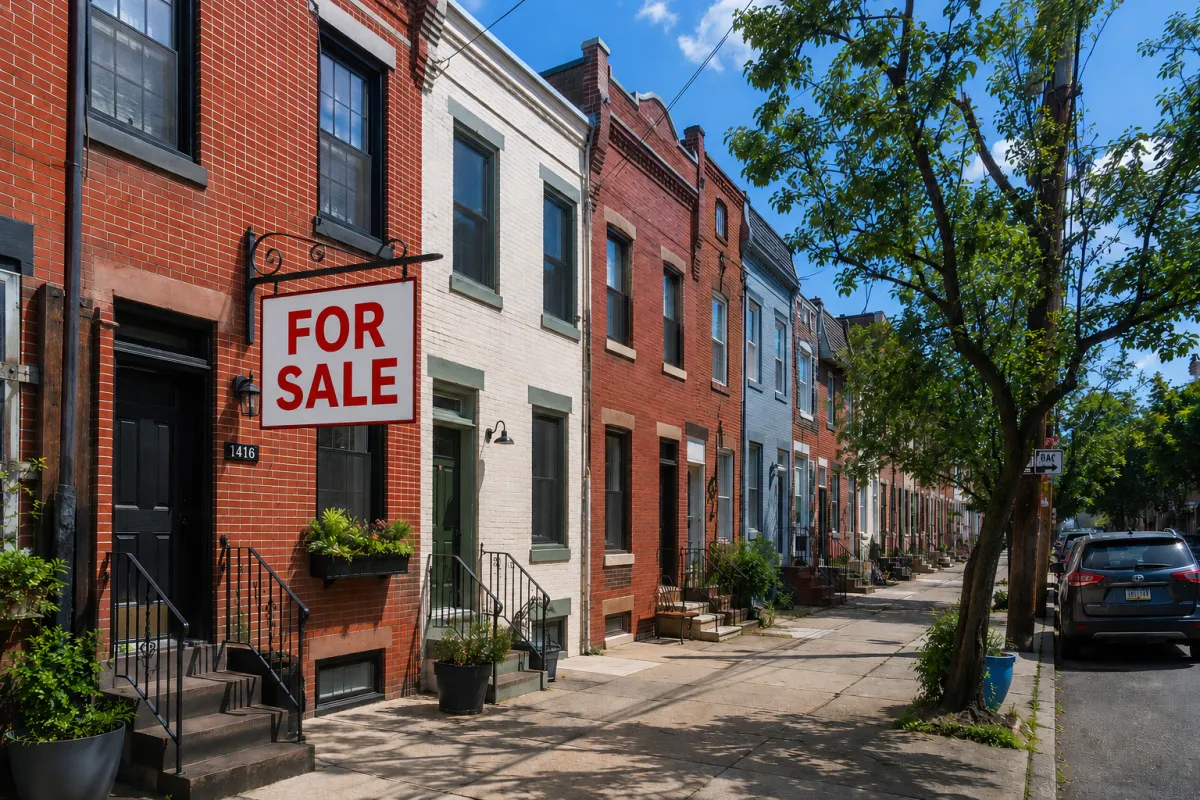
Why Some Philly Homes Sell in 3 Days… and Others Sit for 30+
Why do some Philadelphia homes sell fast while others sit on the market?
In Philadelphia, the difference between a home that sells in days and one that lingers for 30+ usually comes down to three things: pricing, presentation, and launch timing. Homes priced at or near recent comparable sales, that show well online, and that hit the market with momentum tend to generate early offers. Homes that are overpriced, underprepared, or launched with poor photos and limited access tend to stall and once a listing goes stale in Philly's market, it's hard to recover.
You've seen it happen. Two row homes on the same block. Similar size, similar condition, similar price range. One goes under Agreement of Sale in four days with three offers. The other is still sitting three weeks later with a price cut.
It's not luck. And it's usually not the house.
Here's what's actually driving the gap.
The market context: Philly isn't one story
Before getting into what sellers can control, it's worth grounding yourself in what the market is actually doing because it varies a lot depending on where you are.
In the Philadelphia suburbs, Bucks, Delaware, and Montgomery counties homes are moving around 18 days on average. Well-prepared homes are still getting multiple offers. Inside Philadelphia County, the picture is more varied. Some neighborhoods and price points move fast; others are sitting 44-69 days. Inventory has improved year-over-year, which means buyers have more options and less urgency than they did in 2021.
The takeaway: your block isn't the same as the next block. What sold in four days in Fishtown last spring doesn't tell you much about your row home in Point Breeze this fall. What does stay consistent: the factors separating fast sales from slow ones are almost always within the seller's control.
The five factors that determine how fast your home sells
1. Price - the single biggest variable
If there's one thing that determines how long a home sits, it's price.
Buyers today are doing their homework. They cross-reference Zillow, Redfin, and Realtor.com. They see what sold on your street. When a home is priced meaningfully above what the data supports, they scroll past it or they come in expecting a negotiation that the seller isn't ready for.
Here's the dynamic that stings: the first two weeks on market are when you have the most momentum. Buyers who've been waiting for something in your area are watching. If they look and move on, you don't get a second first impression. The home just sits and starts accumulating days on market.
Once a listing hits 30, 45, 60 days without going under contract, something shifts. Buyers assume there's a reason no one else has bought it. Even if you cut the price, the stigma follows the listing.
The homes that sell in 3–5 days aren't priced low. They're priced correctly, competitive with what's actually selling, not what sellers wish the market would pay. This is exactly the conversation we have with every seller before we list.
2. The first showing is online
Before anyone walks through the door, buyers see your home on a screen. If those photos don't work, the physical showing never happens.
This is the one sellers underestimate most. Dark photos. Cluttered rooms. A smartphone shot of a bathroom with the toilet lid up. It sounds basic, but it's shockingly common and it costs sellers real money.
Buyers aren't just evaluating square footage. They're trying to imagine themselves living there. If the photos make the home look cramped or outdated, they move on.
Professional HDR photography not a virtual staging overlay that doesn't match the actual space makes a measurable difference. Clean rooms with neutral surfaces, open blinds, and consistent lighting raise buyer confidence before they ever step inside. In Philly's row home stock especially, where floor plans are relatively predictable, the photos become the primary differentiator between your listing and the one next door.
3. Condition signals risk
Buyers right now are more payment-sensitive than they were a few years ago. When every dollar in a monthly payment matters, buyers are paying attention to cost of ownership, not just the sticker price.
That makes condition a bigger factor than it used to be.
A home with visible deferred maintenance a soft spot on the porch, a water stain on the ceiling, a bathroom that's seen better days triggers a specific reaction: What else is going on in here? Small issues become proxies for bigger questions. Buyers either walk away or come in with a lowball offer and a long repair credit ask.
The homes that sell fast almost always look maintained. Not magazine-perfect. Just: nothing obviously wrong, nothing that makes the buyer nervous. Fresh paint where it matters, cleaned-up grout, a functional everything. The bar isn't as high as sellers think but it has to clear "nothing alarming."
4. Launch momentum (and what kills it)
There's a window, roughly the first 7-14 days of a listing where you have the highest buyer traffic and the best chance at multiple offers. What happens in that window sets the trajectory for everything.
Sellers who maximize it:
List mid-week so buyers can schedule weekend showings
Go live with everything polished on day one, photos, description, price, no exceptions
Stay flexible with showing access from the start
Sellers who miss it often list reactively. The house isn't quite ready, the photos are fine, the price is optimistic. By week three, they're wondering why no one's offered.
The other factor: showing friction. If a home is hard to see, 24-hour notice required, tight windows, owner present during walkthroughs, buyers find something easier. In a market with more inventory, friction loses you showings you'll never know you missed.
5. Philly-specific costs buyers are calculating
A few things unique to this market that affect buyer urgency and offer pace:
Transfer tax. Philadelphia's combined transfer tax is 4.578% as of July 2025 one of the highest in Pennsylvania. Buyers absorbing that on top of down payment and closing costs are running tight numbers. A home priced right still sells; a home priced optimistically gives buyers a reason to hold off or negotiate hard on credits. In Bucks, Delaware, and Montgomery counties, the combined rate is typically closer to 2%, giving buyers more flexibility.
Tax abatement status. If your row home has an active abatement, make that visible in the listing. The post-2022 phase-down schedule is still confusing enough that sellers who explain it clearly have an edge.
Row home inspection dynamics. Shared party walls and shared drainage mean Philadelphia row home inspections tend to surface more questions than suburban single-family homes. Sellers who've addressed obvious issues or have documentation for past repairs, move through the inspection contingency faster and with less drama.
What the fast-selling homes have in common
It's pretty consistent. The homes that go under contract in under a week:
Are priced at or near where the comps land not chasing a number
Go live with professional photos where every room reads clean and bright
Look maintained: fresh paint in the main spaces, no obvious deferred issues
Have flexible showing access from day one
Have sellers who respond quickly to early feedback instead of waiting three weeks to adjust
That's the whole list. The homes that sit are usually missing one or more of those and most often, they're overpriced.
The hardest conversation in this business is telling a seller their price is too high. Everyone knows someone who got a great number in 2021 or 2022, and that anchor is hard to let go of. But the market doesn't negotiate with nostalgia. Comparable homes are your competition not what the market looked like two years ago.
Price it correctly, prepare it honestly, launch it with momentum. That combination still works. We see it every week.
If you're thinking about selling and want to understand exactly what's happening in your neighborhood and price range what's selling, what's sitting, and where your home fits that's the conversation we have every day. If you'd like a straight read on what your home could sell for and what it would take to sell it fast, a strategy call is the place to start.
Frequently Asked Questions
Why is my home sitting on the market in Philadelphia?
The most common reasons are price above what comparable homes have actually sold for, weak listing photos, deferred maintenance making buyers nervous, or limited showing access. In most cases it's one of those and pricing is the leading culprit. The longer a home sits, the harder it is to recover momentum even after a price cut.
How long does it typically take to sell a home in Philadelphia right now?
It varies by neighborhood and price point. In the Philadelphia suburbs, Bucks, Delaware, and Montgomery counties homes are averaging around 18 days on market. Inside Philadelphia County it's longer, ranging from the mid-40s to 69 days depending on the area and price range. Well-prepared, correctly priced homes in active Philly neighborhoods are still moving in under two weeks.
Does staging help sell a home faster in Philadelphia?
Yes, consistently. You don't need a full professional staging job on every home, but rooms that read clean, open, and livable in photos get more showing requests and more showings lead to offers. Decluttering, depersonalizing, and getting the lighting right are the baseline. For vacant homes, some level of staging almost always makes sense.
What's the biggest pricing mistake Philadelphia sellers make?
Overpricing at launch. It feels conservative because you can always come down but that logic misses how buyer psychology works. Buyers who see a home at a high price and pass don't come back when the price drops; they assume something was wrong. The first two weeks are your highest-traffic window. Going in too high wastes it, and a later price cut rarely recovers the original momentum.
Does the time of year affect how fast homes sell in Philadelphia?
Yes. Spring roughly late March through May is consistently the strongest window for sellers, with more buyer activity and faster contract timelines. Fall is the second-best window. Summer slows somewhat, and January and February are the quietest months. That said, well-priced, well-prepared homes sell in every season.