
Where Locals Actually Go: Philly Spots That Don't Make the Tourist Lists
The Liberty Bell is great. Independence Hall is legitimately impressive. And if you've never been, sure do the tour.
But if you've lived in Philadelphia for more than six months, you've probably stopped going to those places entirely. Because the city people actually live in ooks a lot different from the one that shows up in travel guides.
We work across Philly every week, in people's homes, on their blocks, in the neighborhoods they chose. And one thing comes up constantly when we're talking to buyers thinking about planting roots here: they want to know what the city actually feels like to live in. Not the highlights reel. The real thing.
So here's our honest rundown of where Philly residents actually spend their time organized by neighborhood, with a note on what it's like to live nearby. Because knowing a city's spots is one of the better ways to know if a neighborhood is actually right for you.
Passyunk Square: South Philly's Living Room
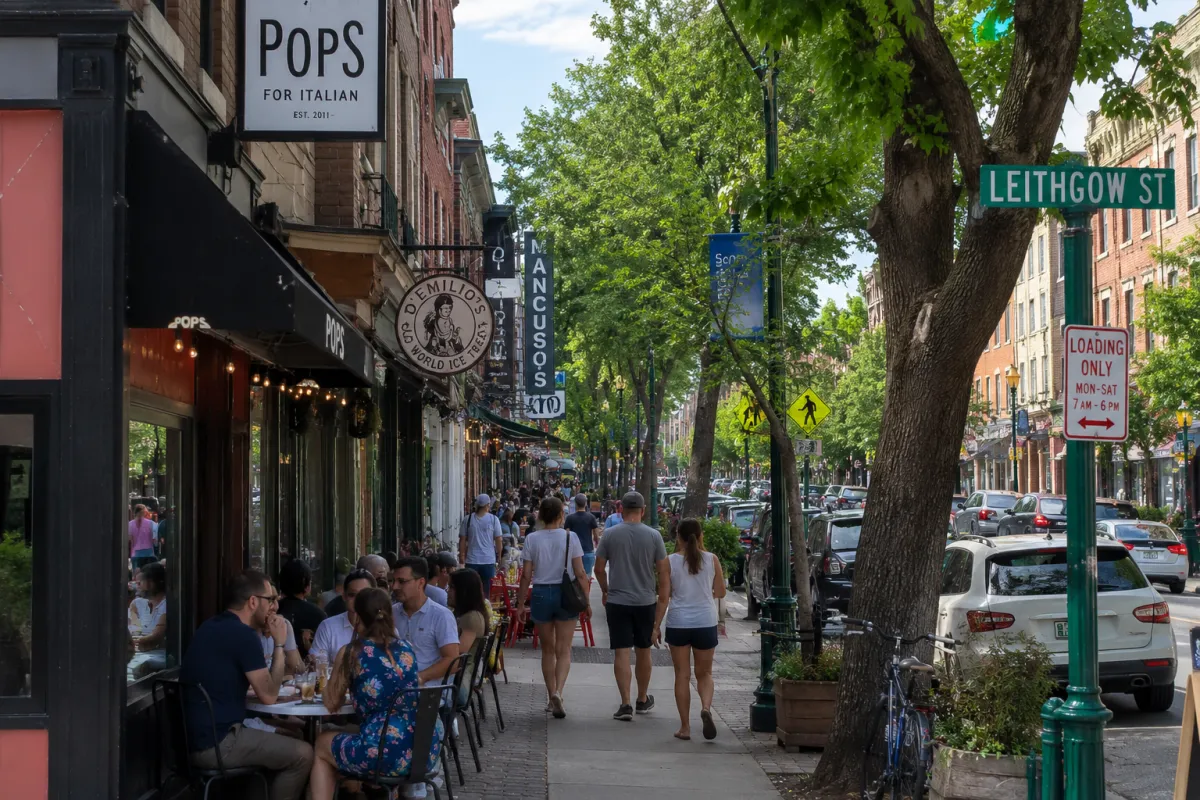
If you want to understand why people are fiercely loyal to this city, spend a Wednesday afternoon on East Passyunk Avenue. The farmers market sets up at the corner of Passyunk and Dickinson from three to seven, and the crowd it draws tells you everything you need to know: new residents in work-from-home clothes mixing with older neighbors carrying reusable bags, everyone swapping recipes and blocking foot traffic in the best possible way.
The Avenue itself is the real draw. Over 150 restaurants and shops line a diagonal stretch that somehow manages to be both nationally recognized and deeply neighborhood-y at the same time. Mancuso's has been selling homemade cheese here for decades. The Singing Fountain is where people sit with ice cream from D'Emilio's on a summer evening and just exist for a while. Shops like Occasionette and Red Gravy Goods have the kind of stuff you didn't know you needed until you walked in.
At night, the energy shifts. Restaurant patios fill up, Thursday nights pick up earlier than you'd expect, and the weekend brings what locals call "dog and baby days" which pretty much sums up the whole vibe of the neighborhood.
What living here is actually like:
The row homes are old and the parking is an ongoing test of your patience and vocabulary. But the block-level community feel, neighbors who know each other by name, chefs who live in the neighborhood and drink at the corner bar is hard to find anywhere else in the city. Columbus Square Park, a few blocks off the Avenue, is where families actually hang out, with a playground, dog park areas, and occasional Parks on Tap beer gardens on the lawn.
Fishtown: High Energy, High Walkability
Fishtown gets written about a lot, so let's skip the "once a blue-collar waterfront neighborhood" history lesson and just say: the lifestyle here is genuinely good, and the weekday version of it is very different from what you see in the weekend press coverage.
Johnny Brenda's on Frankford Avenue is a neighborhood institution, live music upstairs, bar downstairs, happy hour that doesn't make you work for it. Frankford Hall is the loud outdoor beer garden that fills up the second the weather turns, which makes it either great or overwhelming depending on your tolerance for a crowd. R&D is where you go when you want a serious cocktail without the serious atmosphere.
Front Street Cafe has been a locals' brunch spot for years, plant-forward menu, garden out back, the kind of place where people linger. Pizza Shackamaxon and Suraya are both worth the wait if you're coming from outside the neighborhood, but regulars know to go on a Tuesday.
The newer spots have kept coming. LeoFigs on Frankford Avenue a Fishtown concept blending a restaurant with a working winery, built around church pews and communal tables is exactly the kind of place that opens in this neighborhood and immediately feels like it's been there for twenty years. Liguria, from the brothers behind it, does Ligurian-style pizza with scamorza and a serious commitment to what's on the plate.
What living here is actually like:
The walkability score is excellent. You can do most of your daily life on foot, coffee, groceries, dinner, a show without touching your car. The noise and foot traffic on weekends is real, especially on Frankford. If you want quiet, the side streets deliver. If you want energy and access, few neighborhoods in Philadelphia match it.
Northern Liberties: A Little More Low-Key Than Its Neighbor
Northern Liberties sits between Center City and Fishtown and has been building its dining scene in a quieter way. The neighborhood is going through another period of growth right now, and the direction it's going is interesting.
Café La Maude is the brunch spot locals will defend to anyone who questions it French-Lebanese BYOB, seven days a week, lemon ricotta pancakes that sound like they shouldn't work and absolutely do. On the weekend, you will wait. On a random Wednesday when you're supposed to be somewhere else, you might get right in.
Pietramala, a plant-forward BYOB led by Chef Ian Graye, earned the inaugural Michelin Guide Philadelphia's Green Star in 2025, a distinction for restaurants leading in sustainable cooking. That's not the kind of thing that happens to a neighborhood that isn't paying attention. Terra Grill, from chef Laurent Tourondel, opened at 1099 Germantown Avenue and brings a more serious dinner destination to the area alongside Scusi, his casual Sicilian pizza spot next door. Bengaluru Cafe, serving traditional South Indian street food with strong vegetarian options, is exactly the kind of opening that signals a neighborhood becoming a full dining destination.
Jerry's Bar on the cobblestone stretch of Northern Liberties is cozy and thoughtful in a way that doesn't announce itself, one of those spots you go back to without fully understanding why the first time.
What living here is actually like:
NoLibs runs a little calmer than Fishtown on the energy scale. Still walkable, still social, but with a cocktail-forward, slightly more relaxed pace to its nightlife. The Piazza is a focal point for events. The neighborhood's location close to everything, quieter than its southern neighbor tends to appeal to people a little further along in whatever chapter of life they're in.
Queen Village: Old City's Cooler, Quieter Sibling
Queen Village doesn't get the press it deserves, which is probably exactly why people who live there don't mind. It's one of the oldest sections of the city, settled before the English arrived, with street names like Swanson and Christian that trace back to Swedish settlersand it's managed to stay genuinely neighborhood-y while sitting minutes from the Delaware River waterfront and South Street.
The dining scene here is growing. Ambra, an intimate multi-course Italian tasting menu, earned a spot in the 2025 Michelin Guide, the kind of recognition that quietly changes a neighborhood's profile. At Southwark next door, crab and corn hushpuppies and a bone-in ribeye anchor a menu built around local farms. The independent boutiques and unpretentious bars along the walkable streets are the kind of thing buyers notice only after they've lived here for a few months and realize they almost never leave the neighborhood on weekends.
What living here is actually like:
Queen Village has some of Philly's oldest residential architecture and a "come as you are" energy that doesn't feel manufactured. It's close to the river, close to South Street, close to Passyunk but feels residential in a way those corridors don't. Waltz, a new Italian-American spot that just opened at 2351 S. Front Street with live music and an old-world feel, is exactly the kind of place a neighborhood like this produces when it's working.
Point Breeze: The One That's Still Becoming
Point Breeze has been changing for a decade, and it's still mid-transformation in a way that makes it genuinely interesting to watch and, depending on where you are in your home search, worth paying attention to.
The neighborhood has a deep history and a casual energy that hasn't been scrubbed away by development. The row homes are a mix of original stock and the modern townhouses that have gone up over the past several years. The eating and drinking options, multicultural eateries, unassuming cafes, a handful of stylish bars are real, not aspirational.
Point Breeze sits south of Graduate Hospital and west of Passyunk Square, close enough to benefit from both without the price tags that come with them. That math is why buyers who missed the Graduate Hospital window five years ago are paying close attention here now.
What living here is actually like:
Still evolving. That means some blocks feel more established than others, and the experience of living here depends a lot on which exact street you land on. But the proximity to East Passyunk, the Schuylkill River Trail, and the broader South Philly food scene means the lifestyle access is already there, even as the neighborhood itself keeps building.
Outdoor Spots Locals Actually Use
The Schuylkill River Trail runs more than 20 miles along the river and is legitimately one of the better amenities in the city. Locals use it for morning runs, bike commutes, and the occasional Sunday when you need to get outside without getting in a car. The skyline views from certain stretches are worth the trip on their own.
The Bok Building in South Philly a shuttered high school that's been reimagined as a creative hub has Bok Bar on the roof, which serves drinks alongside a rotating lineup of local restaurant pop-ups and a view of the Philadelphia skyline that most tourists have never seen. It's the kind of place that takes fifteen minutes to explain to someone who's never been and zero seconds to understand once you're there.
Race Street Pier along the Delaware River waterfront is a quieter version of Spruce Street Harbor Park better for a weekday walk than a weekend crowd. The Penn Museum in West Philly, technically a major institution but perpetually undervisited, houses one of the great archaeology collections in the country and never has the lines you'd expect for what it actually contains.
The Clay Studio, which moved into its expanded space in Kensington in 2022, has gallery exhibitions open to the public daily, free of charge, the kind of thing that's been in the city for fifty years and still doesn't make it onto most visitor itineraries.
Why This Matters If You're Thinking About Where to Live
The spots people spend time in are one of the more honest signals about what a neighborhood actually feels like to live in. A block with a good corner bar and a Wednesday farmers market within walking distance is a different daily life than a block without them even if the houses look similar on paper and the price per square foot is the same.
We talk about this with buyers all the time. The listing tells you the square footage and the number of bathrooms. It doesn't tell you whether you'll walk to dinner twice a week or get in a car every time you want to eat somewhere worth eating. It doesn't tell you whether you'll know your neighbors in six months or still feel like you're passing through.
Philadelphia has neighborhoods for almost every version of the life you're trying to build here. The key is knowing which one matches how you actually want to spend your time not just what sounds good in a listing description. If you're figuring that out, we're happy to talk through it. We know these blocks. We're in them every day.
If you're thinking about buying in Philadelphia and want to understand what different neighborhoods actually feel like to live in, not just what they look like on paper, a quick conversation with our team is a good place to start.