
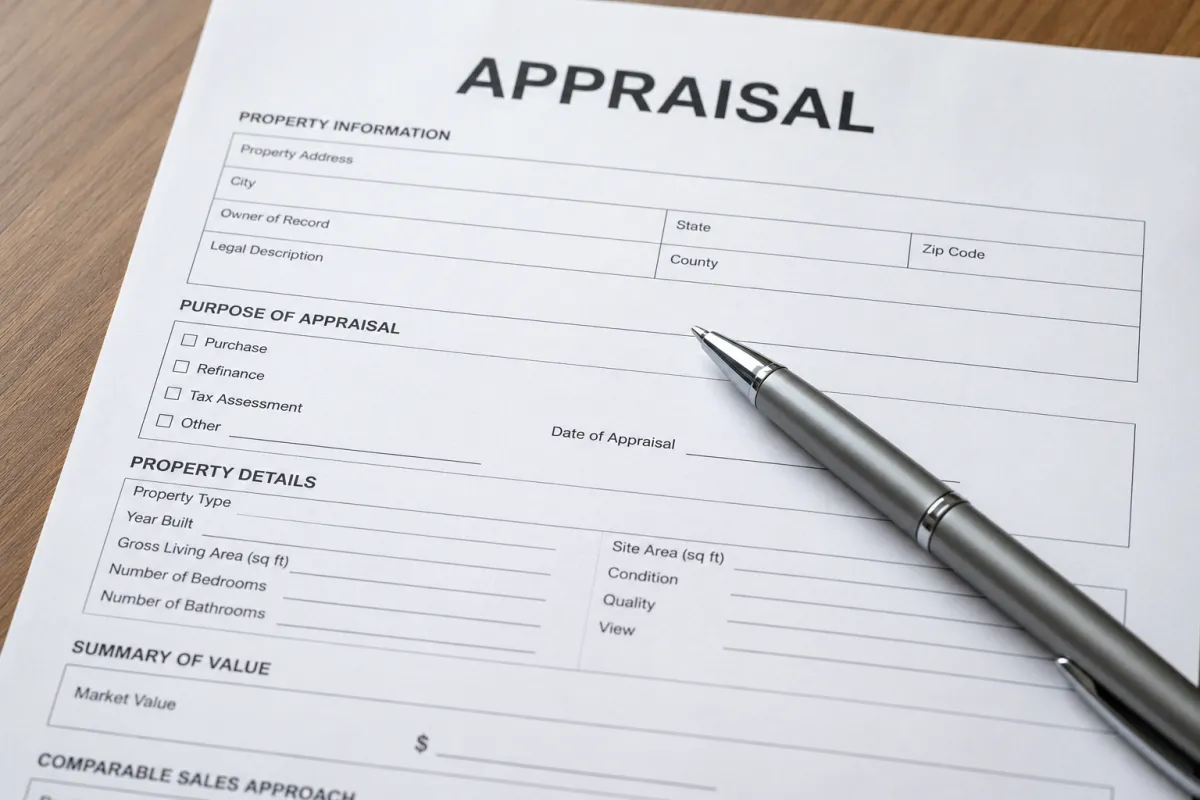
What Happens When a Philly Home Appraisal Comes In Low
What happens when a home appraisal comes in below the offer price?
When a lender's appraisal comes in below your accepted offer, it doesn't automatically kill the deal, it opens a negotiation. Depending on the appraisal contingency in your Agreement of Sale, buyers can ask the seller to lower the price, cover the gap themselves, split the difference, or request a value reconsideration. In Philadelphia's competitive pockets, where offers often land above asking, appraisal gaps are common and rarely fatal to a well-structured deal.
Your offer got accepted. You've mentally moved in already, you're arranging furniture in your head, picking a paint color for the stair rail. Then the lender calls: the appraisal came in $15,000 under what you offered. And now you're doing math you didn't sign up for tonight.
Take a breath. A low appraisal is a number problem, not a relationship problem between you and the house. It's solvable more often than not.
Why Philly appraisals come in low more than people expect
A few things stack up in this market specifically:
Competitive offers. When multiple buyers push a price above asking to win a rowhome in Fishtown or Passyunk Square, the contract price and the appraised value can drift apart. The appraiser isn't pricing what you were willing to pay to win, they're pricing recent comparable sales.
Comp scarcity. Philly's rowhome stock varies block to block. One house has a gut renovation, the one next door still has its original kitchen. Appraisers sometimes have to stretch outside the ideal radius or timeframe to find a true match, and that can pull the number down.
Lag in a fast-moving market. If prices are climbing quickly, the most recent closed sales an appraiser can use are, by definition, a little behind where the market is today.
None of that means the appraiser got it wrong. It means the appraisal is a snapshot of recent data, and recent data doesn't always keep pace with a hot week of showings.
What the appraisal contingency in your Agreement of Sale actually protects
Just like the inspection contingency, the appraisal contingency gives you a defined process instead of leaving you to guess. It doesn't cancel your deal automatically, it gives you a path to renegotiate, cover the gap, or exit within a set window if the numbers genuinely don't work.
The contingency exists so the shortfall becomes a conversation with the seller, not a silent deal-killer three days before closing.
Your real options when the number comes back low
Ask the seller to reduce the price to match the appraised value. Sellers who are motivated, or who priced aggressively to begin with, often agree rather than restart the search for a new buyer.
Cover the gap yourself. If you have the cash, you pay the difference between the loan amount and the purchase price out of pocket. This is common in competitive offers where buyers include appraisal gap coverage as part of what made their offer attractive in the first place.
Split the difference. Seller comes down partway, buyer brings a little extra cash. A middle-ground outcome more deals land on than people expect.
Request a reconsideration of value. Your agent submits additional comparable sales the appraiser may not have used, and the lender can ask for a formal review. It doesn't always move the number, but it's worth doing before assuming the appraisal is final.
Walk away. If the appraisal contingency is in place and the gap can't be resolved, you can cancel and recover your deposit.
A $10,000-$15,000 gap sounds like a dealbreaker in isolation. Next to the alternative of losing the house and starting over in a market where you were already competing for it, it often reads differently. Every situation comes down to your specific numbers, your lender's guidelines, and how much room the seller actually has, which is exactly the kind of math we walk through with clients the day the appraisal comes back, alongside our lender partner Mike Rosman at Union Home Mortgage when financing options are part of the picture.
If you're in a position where you had to win a bidding war to get the house in the first place, a low appraisal is often just the second half of that same story and there's usually still a path through it.
Frequently Asked Questions
Can I still get the house if the appraisal comes in low?
Yes, in most cases. A low appraisal opens a negotiation between you and the seller, it doesn't automatically end the deal. Most gaps get resolved through a price reduction, buyer covering the difference in cash, or some combination of both.
Who pays for an appraisal gap in Philadelphia?
There's no fixed rule, it's negotiated. It might fall entirely on the buyer, get split between buyer and seller, or get absorbed by the seller through a price reduction, depending on how motivated each side is and what the appraisal contingency allows.
What's a reconsideration of value, and does it actually work?
It's a formal request, usually submitted by your agent through the lender, asking the appraiser to review additional comparable sales that may not have been considered. It doesn't guarantee a higher number, but it's a legitimate step worth taking before treating the original appraisal as the final word.
Does a low appraisal affect the seller if I walk away?
Yes, if the deal falls through, the seller is back on the market, and any appraisal-related concerns may resurface with the next buyer's lender too, especially if the comps haven't changed. It's part of why many sellers are willing to negotiate rather than restart.
Do all-cash offers face the same appraisal risk?
No. Appraisals are a lender requirement tied to the loan. Cash buyers can choose to get one for their own peace of mind, but there's no lender on the other end requiring the number to match the offer, so there's no financing-driven gap to resolve.
If you're staring at a low appraisal right now and trying to figure out what's actually negotiable, that's exactly the kind of conversation we have with buyers and sellers before anyone assumes the deal is dead. Book a strategy call and we'll go through your numbers together.