
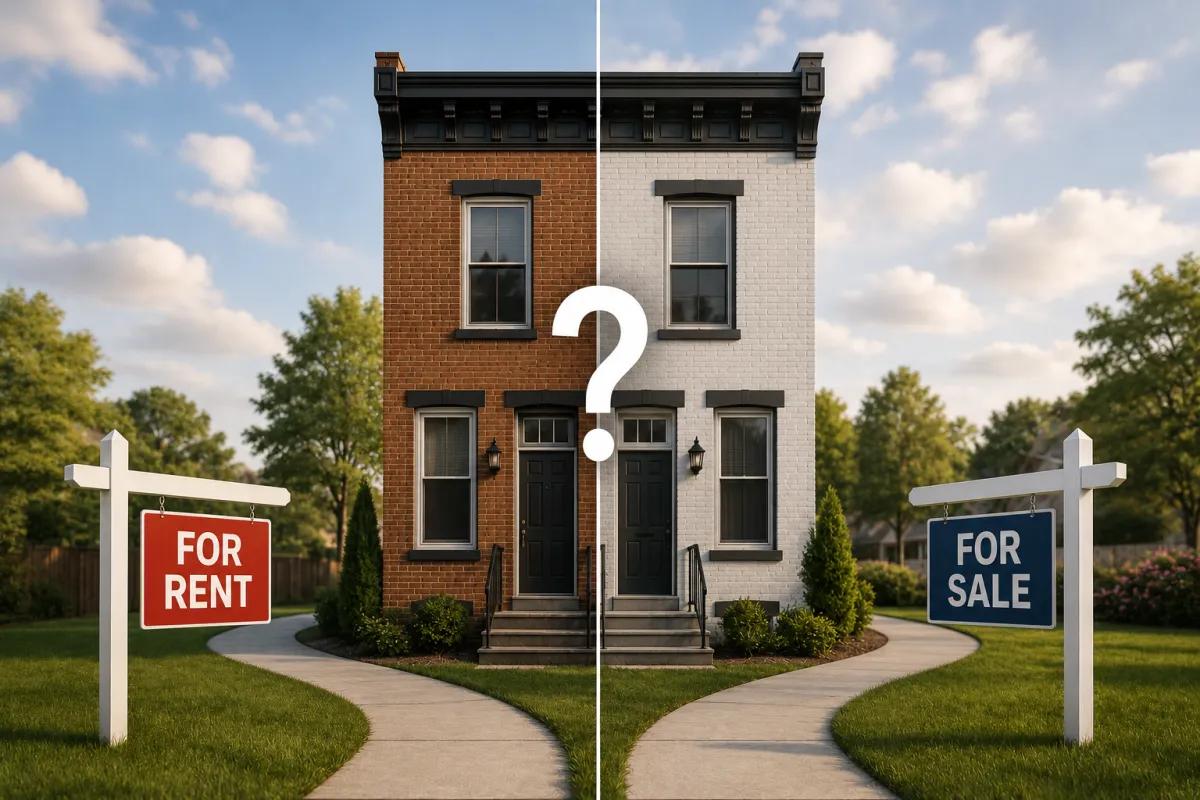
Should You Turn Your Philly Property Into a Rental or Sell It?
You're not going to live in the property anymore. Now the question is: do you rent it out or cash out?
The internet defaults to "rent it, passive income, appreciation, tax write-offs." That's a national take. Philadelphia has its own math.
If You're Thinking About Selling
Philly's 2026 market is steady. Homes are closing around 97% of list price, and the region is projecting 2-4% price appreciation this year. If you've owned for a few years, you're sitting on real equity.
Just know what you'll actually net. Philadelphia's transfer tax is 4.578% one of the highest in the state, typically split between buyer and seller, so you're paying roughly 2.3% on your side. Add commission and closing costs, and run the real number before you decide.
If You're Thinking About Renting
The cash flow math needs to work and in 2026, it's tighter than it looks. Median asking rent in Philadelphia is around $1,722/month, down about 2% year-over-year. Average vacancy is running 60+ days. What tenants actually sign for is typically $150-175 below asking.
If your carrying costs are close to market rent, the margin is thin. You need reserves, and you need to be ready to operate a compliant rental.
Philadelphia Just Made "Landlord" More Complicated
This is what surprises most people:
Rental license required. You must have a valid L&I rental license before collecting rent. No license = tenants can sue for back rent.
Proactive inspections. The Safe Healthy Homes Act now requires regular inspections of rental units not just when a tenant complains.
Good Cause Eviction expanded. As of 2026, these protections cover all leases. You can't non-renew or evict without a legally defined reason.
Background check fee cap. Since December 2025, landlord screening fees are capped at $50 or actual cost, whichever is less.
None of this makes renting impossible. But doing it casually without knowing the compliance layer is a real risk in this city.
Sell if your equity is meaningful and you'd rather have clean capital than a management obligation.
Rent if your carrying costs are well below market rent, you have reserves, and you're prepared to run a licensed, compliant operation.
The right answer is your specific property, your specific numbers, and what you actually want your life to look like.
Want to know what your property would sell for today? We'll run a no-commitment estimate for you.
Frequently Asked Questions
Do I need a rental license in Philadelphia?
Yes, before you collect a single dollar in rent. You also need a Certificate of Rental Suitability. Skip it and you're exposed to legal liability.
Is Philly renting still profitable in 2026?
For landlords with a low purchase basis, yes. For recent buyers with higher carrying costs, often no, especially after vacancy, maintenance, and management fees.
How does the transfer tax hit me if I sell?
Philadelphia's combined transfer tax is 4.578%. Split evenly, you'd pay roughly 2.3% as the seller about $9,200 on a $400K sale.
What is Good Cause Eviction?
A Philadelphia law that requires landlords to have a legally defined reason to evict or not renew a lease. Expanded in 2026 to cover all lease types, not just month-to-month.