
Invisible Factors That Impact Your Philly Home's Value
What invisible factors affect Philadelphia home values?
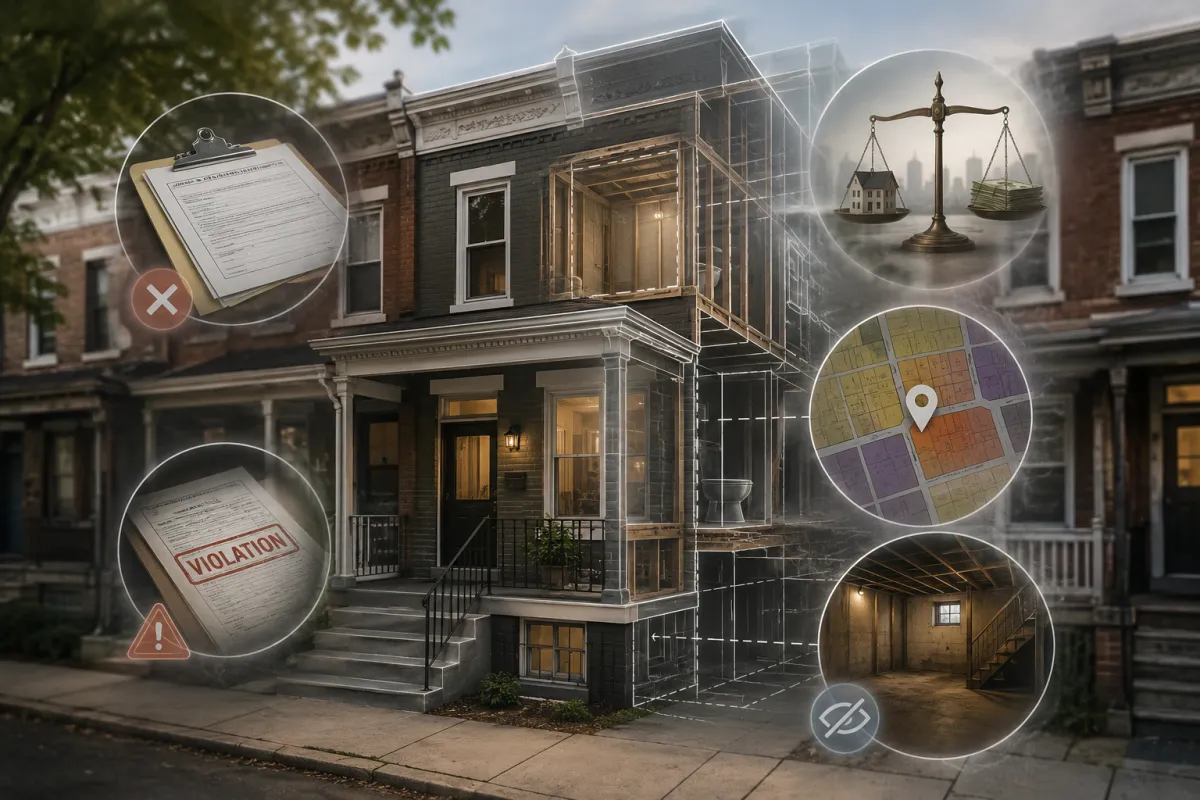
Philadelphia home values are shaped by more than finishes and square footage. Factors like open L&I permits, AVI assessment accuracy, zoning designation, and whether unpermitted work exists on title can significantly affect what a buyer will offer and what an appraiser will support. Sellers who understand these factors before listing tend to net more and run into fewer surprises at closing.
You redid the kitchen. The bathroom is clean. You repainted the whole place and it looks great.
And yet the appraisal comes in low, or a buyer backs out after their inspector flags something you didn't even know was an issue.
This happens more than people expect in Philly because value isn't just what you can see. There's a whole layer of invisible factors that shape what your home is actually worth to a buyer and to a lender. Most sellers don't find out about them until they're already under contract.
If you're weighing whether now is even the right time to move, check out our post on whether spring is actually the best time to sell in Philadelphia but if you're leaning toward listing, these are the things you want to know first.
Open Permits and L&I Violations
This is the one that catches people off guard most often.
If a previous owner or you pulled a permit for work and never got the final inspection signed off, that permit is still open on your record with Licenses & Inspections. Buyers' attorneys find these during title review. And depending on what the work was, it can slow a closing or kill a deal entirely.
Same goes for L&I violations. An open violation is a public record. Buyers see it, lenders see it, and it creates a question mark that's often harder to manage mid-transaction than it would have been to resolve beforehand.
If you're thinking about selling, it's worth pulling your property's L&I history before you list. We do this routinely for clients, it takes about five minutes and can save weeks of headaches.
How Your AVI Assessment Compares to Your Sale Price
Philadelphia's property tax system runs through the Actual Value Initiative AVI which is supposed to assess properties at market value. In practice, assessments can lag significantly behind what homes are actually selling for, or in some cases overshoot.
Why does this matter to a buyer? Because property taxes are part of their monthly carrying cost. A buyer running the numbers on a home in Fishtown or Point Breeze is going to factor in the tax bill and if the assessment seems way off from the sale price, they'll wonder (sometimes rightly) what's coming in the next reassessment cycle.
If you're a long-term owner in a neighborhood that's appreciated significantly, it's worth knowing where your assessment sits before you price the home. If you're not sure what your home is actually worth right now, you can get a quick home value estimate here.
Zoning and What It Allows
Most buyers don't ask about zoning until they have a specific reason to — an in-law suite, an ADU, a home office with a separate entrance. But zoning shapes what's possible with a property, and sophisticated buyers pay attention.
In Philadelphia, a home zoned RSA-5 (the most common single-family designation) has different flexibility than one zoned CMX or RM. If your property has mixed-use potential or sits in a zone that allows more density, that can be a real value driver for the right buyer, especially investors.
This comes up a lot in the townhouse vs. condo conversation too, zoning and what a property can legally become matters just as much as what it is today.
If you don't know your zoning classification, you can look it up through the city's Atlas tool. And if you think your property might have upside that isn't obvious from the listing, that's a conversation worth having before you go to market.
Unpermitted Work
Philly has a lot of row homes with finished basements, added bathrooms, and converted attic spaces. Some of it was done with permits. A lot of it wasn't.
Unpermitted work doesn't automatically tank a sale. But it does create complications particularly with FHA and VA financing, where appraisers flag non-permitted square footage. If a buyer's lender won't count the finished basement in the appraised value, it can create a gap between the sale price and the appraised value that's hard to bridge.
The fix isn't always simple, but knowing the issue exists before you list gives you options. Sometimes you can retroactively permit work. Sometimes you just price accordingly and disclose it clearly in the PA Seller's Property Disclosure Statement. What you don't want is to find out under contract when you have no room to maneuver.
The Block - Not Just the Neighborhood
In a city built around row homes, the specific block matters in ways that don't show up in any data set. Buyers walk the street. They notice the neighbor with the overgrown lot. They see whether everyone takes care of their stoop. They clock the parking situation at 7pm on a Wednesday.
You can't control most of this. But you can make sure your side of it is buttressed exterior condition, front of house, any shared alley access. In Philly, curb appeal from the sidewalk carries more weight than people realize.
What This Means If You're Thinking About Selling
The sellers who navigate this best are the ones who take a few weeks before listing to look under the hood. Pull the L&I record. Know your assessment. Understand your zoning. Identify any work that wasn't permitted and decide how to handle it.
We see sellers run into trouble when they follow conventional wisdom without checking whether it actually applies to their situation, if you haven't already, our roundup of the worst real estate advice we hear in Philadelphia is worth a read before you make any big decisions.
And if you're trying to figure out whether to sell first or buy first, that's a whole other layer, we covered it in Should You Buy Before You Sell?
Your specific situation, what's on title, what the assessment says, what your block looks like — is going to shape what you can realistically price and what a buyer will actually offer. That's the kind of thing we walk through with every seller before we go to market.
If you want to talk through what any of this means for your home, reach out. We're happy to run through it with you before anything is official.